
Home improvements · Rukva Construction
How to organize a home project without losing the details
Set priorities, connect related tasks, and keep decisions in one place so your repair or renovation plan stays clear.
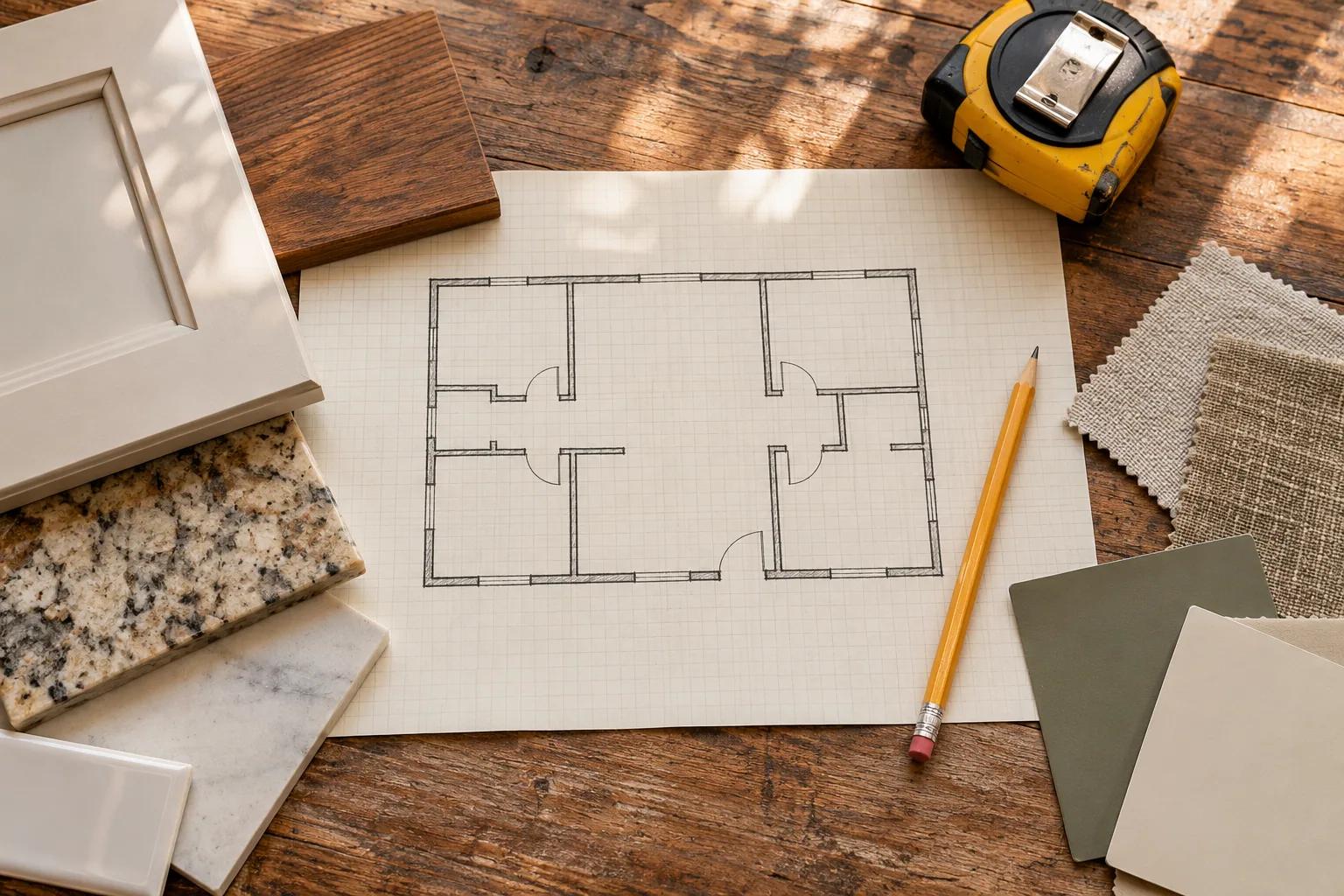
A home project can become a collection of disconnected decisions: a flooring sample on the table, a fixture link in a message, a question you meant to ask last week. You do not need a complicated system to bring them together. You need one plan that shows what matters, what depends on what, and what is still undecided.
Put the whole project on one list
Write down every repair and improvement you are considering. Keep the first pass simple: the room, the concern, and the result you want. Include smaller tasks that might be easy to overlook, such as a threshold next to a new floor or a fixture that needs to fit existing cabinetry.
Then sort the list into work to assess first, improvements you want to plan, and ideas that can wait. These groups help explain your priorities without treating every task as equally urgent. This is a planning exercise, not a way to diagnose a building problem. A concern that may be unsafe needs appropriate attention rather than a place at the bottom of a renovation list.
Give the project a clear purpose
Describe what a useful result would look like in everyday life. Perhaps you want a kitchen that is easier to move through, a bedroom floor that is easier to care for, or a repair concern assessed before choosing new finishes. A concrete purpose helps you weigh options when the project starts to grow.
Separate needs from preferences. Keeping a bathroom available may be a need; choosing a particular finish may be a preference. Neither list has to be long. If flooring is central to the plan, the guide to planning a flooring refresh shows how to turn household routines into practical questions about a room.
Connect tasks before fixing their order
Look for work that touches the same space. A bathroom update may involve flooring, plumbing fixtures, lighting, cabinetry, and wall finishes. A change to one part can create questions for the others. Put those connections on the page so they are discussed together instead of discovered after a purchase.
Do not assume that a generic renovation sequence fits your home. Ask how access, assessment, material selection, and installation should be coordinated for the actual scope. Record the proposed sequence and what must be confirmed before the next step. The aim is to understand dependencies, not to prescribe technical work yourself.
Keep one record of decisions
Use a folder, notebook, or shared document for photos, product links, measurements, questions, and proposals. Give each item a room name and a short description. Keep the latest agreed version easy to identify; a collection of screenshots is less useful when no one knows which choice replaced which.
Mark decisions as proposed, selected, or confirmed in the project scope. Those labels prevent an idea from becoming an instruction by accident. When you change a preference, record the change and share it with the people involved. Ask whether it changes the work, materials, timing, or price before treating it as settled.
Make the first project conversation useful
Turn your notes into a short brief: location, main goal, rooms involved, known concerns, choices already made, and practical limits. Include which rooms must remain available and whether you expect to live in the home during work. Leave room for questions rather than trying to predict every answer.
The guide to preparing for a home estimate gives you a fuller checklist for that first contact. Share the whole picture even if you intend to start with one room. That context helps the discussion account for related work while keeping the initial scope clear.
Compare proposals against the same plan
As estimates arrive, check each one against your brief. Does it cover the same rooms and tasks? Are material choices specific enough to compare? What is excluded or left for later assessment? Keep questions beside the relevant line rather than judging a proposal from its total alone.
Use how to compare home improvement estimates to work through differences before making a decision. Once you agree on the work, keep the scope, decisions, and contact details together. For a project in Houston, Peach, or Bibb County, call or email Rukva Construction with your location and the priorities at the top of your list.