Estimates · Rukva Construction
How to compare home improvement estimates
Look beyond the total: compare the work, materials, exclusions, and open questions in each home improvement proposal.
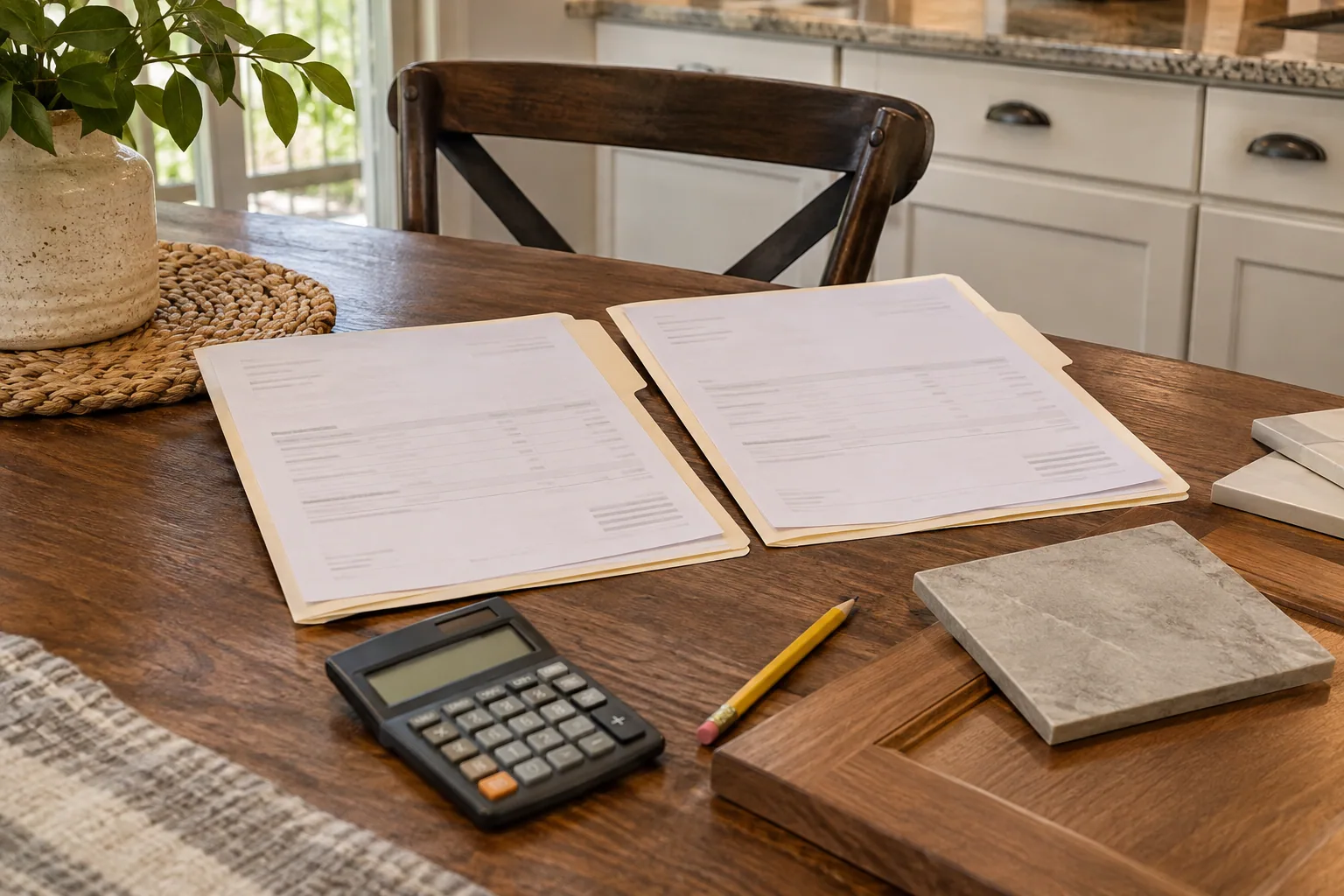
Two estimates can describe different projects even when they carry the same heading. One may include removal and cleanup; another may leave those tasks out. Before choosing by price, put the proposals beside the result you want and check what each actually covers. This guide gives you a practical way to compare them and identify questions worth asking.
Begin with a shared project description
Use the same description when asking for proposals. List the rooms, the work you want considered, the materials already selected, and the choices still open. If one person prices a single room while another includes adjoining spaces, the totals cannot answer the same question.
If your notes are still scattered, begin with organizing a home project. Give each proposal a place in that record. Keep its date, the version of your brief it follows, and any later clarification together. This makes it easier to see whether a difference comes from the proposal or from a change in your request.
Compare the tasks line by line
Make a simple comparison with a row for each task. Depending on the project, your rows might include assessment, preparation, removal, installation, finishing, and debris removal. Mark each item as included, excluded, or not yet clear. Do not treat silence as confirmation that a task is covered.
For example, two flooring proposals might both mention installation while describing different preparation or trim work. Ask each provider to clarify those items in writing. Our guide to planning a flooring refresh explains the room edges and transitions that can be easy to miss when you focus only on the open floor area.
Check what the material description means
Look for enough detail to identify what is being proposed. A product name, size, finish, or specification may matter more than a broad material category. If you have not selected a product, ask what assumption the estimate uses and what would happen if your selection differs.
Keep supply and installation responsibilities clear. Ask who orders the materials, who confirms compatibility, and what needs approval before a purchase. If a proposal includes an allowance, ask what that amount covers and how the final selection would affect the total. These questions help you understand the offer without assuming that every estimate follows the same format.
Bring exclusions and unknowns into view
Read the exclusions as carefully as the included work. Identify anything you expected to see but cannot find. Existing conditions may also leave questions that require an assessment or further access. Ask what is known, what remains uncertain, and how that uncertainty affects the proposal.
For concealed conditions, ask how a finding would be documented and how additional work would be discussed before proceeding. Keep the answer with the estimate. A clear process for questions is more useful than a promise that a home project can never change. Avoid assuming that an omitted item is either free or unnecessary.
Discuss access, timing, and household arrangements
Compare the practical assumptions behind each proposal. Does the room need to be empty? Who moves furniture? Which areas need access, and when? How are material availability and unresolved selections handled in the proposed schedule? Separate your preferred dates from dates the provider has actually confirmed.
An occupied home adds questions about everyday use. Before settling the arrangements, read how to prepare your home for renovation work. Bring those needs into the conversation so a proposal can be reviewed alongside the way your household will use the space.
Resolve differences before choosing
Put your remaining questions into a short list and ask for clarification against the relevant part of each proposal. Keep written answers with the version they amend. If the scope changes, make sure you are comparing the revised work rather than an earlier total that no longer describes it.
Choose with a clear understanding of the proposed tasks, materials, responsibilities, and unresolved points. This guide does not provide a price benchmark or tell you which offer to accept. To discuss a Rukva Construction project in Middle Georgia, call or email with your location, the work you have in mind, and any scope questions you want to address.